
Community
One dead, another injured after shooting at northwest Houston apartment complex
By Marisol Torres
Advertisement · Why this ad?
Holding a degree in Communication from the University of Texas at Tyler, Marisol has spent 5 years covering community events and local culture. Her previous work includes contributions to the KETK News and various lifestyle blogs in the area.
More from Marisol →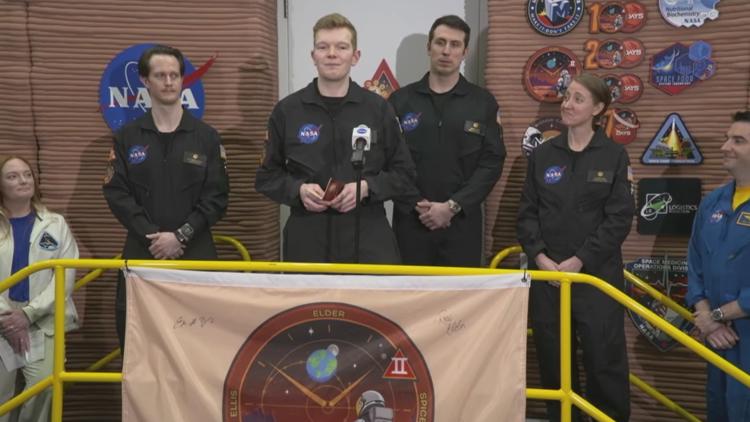
As the sun dipped below the horizon, casting a warm golden glow over Beaumont, a small crowd gathered at the local community center. Excitement buzzed in the air as four brave souls emerged from a year-long isolation in a 3D-printed habitat, designed to mimic life on Mars. Their faces, illuminated by the soft light of the setting sun, reflected a mix of relief and exhilaration. These volunteers, who had dedicated a year of their lives to a mission that could redefine humanity's future in space, were about to share their incredible journey.
Last year, four volunteers—Dr. Janelle Edwards, a biologist; Mark Thompson, an engineer; Sarah Lee, an architect; and Carlos Martinez, a geologist—entered the habitat in Houston. Their mission was part of a NASA-funded project aimed at understanding the challenges of long-term space exploration. For 365 days, they lived in a space that simulated the Martian environment, complete with limited resources and the constant need for teamwork and problem-solving.
The habitat was equipped with all the essentials for survival, including a hydroponic garden for fresh food and advanced technology to monitor their health. However, the conditions were far from comfortable. The isolation, both physical and psychological, tested their resilience and adaptability. Each day was a blend of routine tasks and unexpected challenges, from repairing equipment to conducting scientific experiments.
As the volunteers shared their experiences, the community of Beaumont listened intently. Many were inspired by their bravery and commitment to science. Local resident and science teacher, Mrs. Linda Grant, expressed her admiration, saying, "These individuals are true pioneers. Their work may pave the way for future generations to explore Mars and beyond." The event drew in families, educators, and local leaders, all eager to support and learn from the volunteers' experience.
Among the attendees was Mayor Becky Ames, who praised the volunteers for their courage and dedication. "This project not only showcases the spirit of innovation that Beaumont embodies but also highlights the importance of investing in our future," she said. Her presence underscored the community's commitment to fostering a culture of exploration and education.
The volunteers took time to engage with the audience, answering questions about their experiences and the importance of their mission. The event was not just a celebration of their return but also an opportunity to spark interest in STEM (Science, Technology, Engineering, and Mathematics) fields among local youth. Many students in attendance were captivated, their eyes wide with wonder as they envisioned themselves as future astronauts or engineers.
Local high school student, Emma Rodriguez, shared her thoughts after the event: "Hearing their stories made me believe that I can achieve my dreams in science. I want to work in space exploration now more than ever!" The enthusiasm of young minds like Emma's is exactly what the volunteers aimed to inspire.
Living in isolation for a year brought its own set of challenges. The volunteers spoke candidly about the mental health aspects of their mission. Mark Thompson noted, "There were days when the walls felt like they were closing in on us. We had to find ways to cope, whether through exercise, meditation, or simply talking to each other. It taught us the importance of communication and support in overcoming adversity."
Dr. Edwards emphasized the significance of maintaining a routine. "Establishing a daily schedule helped us stay grounded. It was crucial for our mental well-being and productivity. We learned that structure is key, whether on Earth or Mars." Their experiences serve as a reminder of the importance of mental health, especially in times of stress and uncertainty.
The psychological impact of isolation is a pressing concern, especially as humanity looks towards long-duration missions in space. The lessons learned by the volunteers may inform future missions and help prepare astronauts for the mental challenges they will face. This aspect of their journey resonated deeply with local mental health advocates, who see potential applications for improving mental health support within the community.
The lessons learned during this year-long mission extend beyond the confines of their habitat. Sarah Lee shared, "We discovered innovative ways to solve problems with limited resources. This experience has real-world applications that can benefit our communities, especially in areas facing resource scarcity." The team's ability to adapt and innovate is a testament to human resilience and creativity.
Furthermore, Carlos Martinez highlighted the importance of teamwork. "We had to rely on each other completely. This mission was a reminder that collaboration is essential, not just in space but in every aspect of life. We can achieve so much more when we work together." Their insights resonate deeply with the values of family and community, emphasizing the strength found in unity.
In Beaumont, this message of collaboration is already taking root. Local organizations are planning workshops to teach teamwork and problem-solving skills to students, drawing inspiration from the volunteers' experiences. The hope is to cultivate a generation that values cooperation as much as individual achievement.
As the event concluded, the volunteers expressed their hopes for the future of space exploration. They dream of a day when humanity can establish a sustainable presence on Mars, paving the way for further exploration of our solar system. Dr. Edwards remarked, "This is just the beginning. We need more people to get involved in space science and exploration. The future is bright, and it’s up to us to make it happen."
Beaumont’s community is already taking steps to foster this interest. Local schools are planning to incorporate more STEM-based programs, encouraging students to pursue careers in science and technology. The Beaumont Chamber of Commerce is also exploring partnerships with organizations that promote space exploration and education, ensuring that the spirit of discovery continues to thrive.
Moreover, the volunteers are committed to staying engaged with the community. They plan to host regular workshops and talks at local schools and community centers, sharing their knowledge and experiences to inspire the next generation of explorers. Their journey may have ended, but their mission to ignite passion for space exploration in others is just beginning.
By Marisol Torres
By Marisol Torres

By Marisol Torres
By Marisol Torres